AI & Automation
AI Agent Development
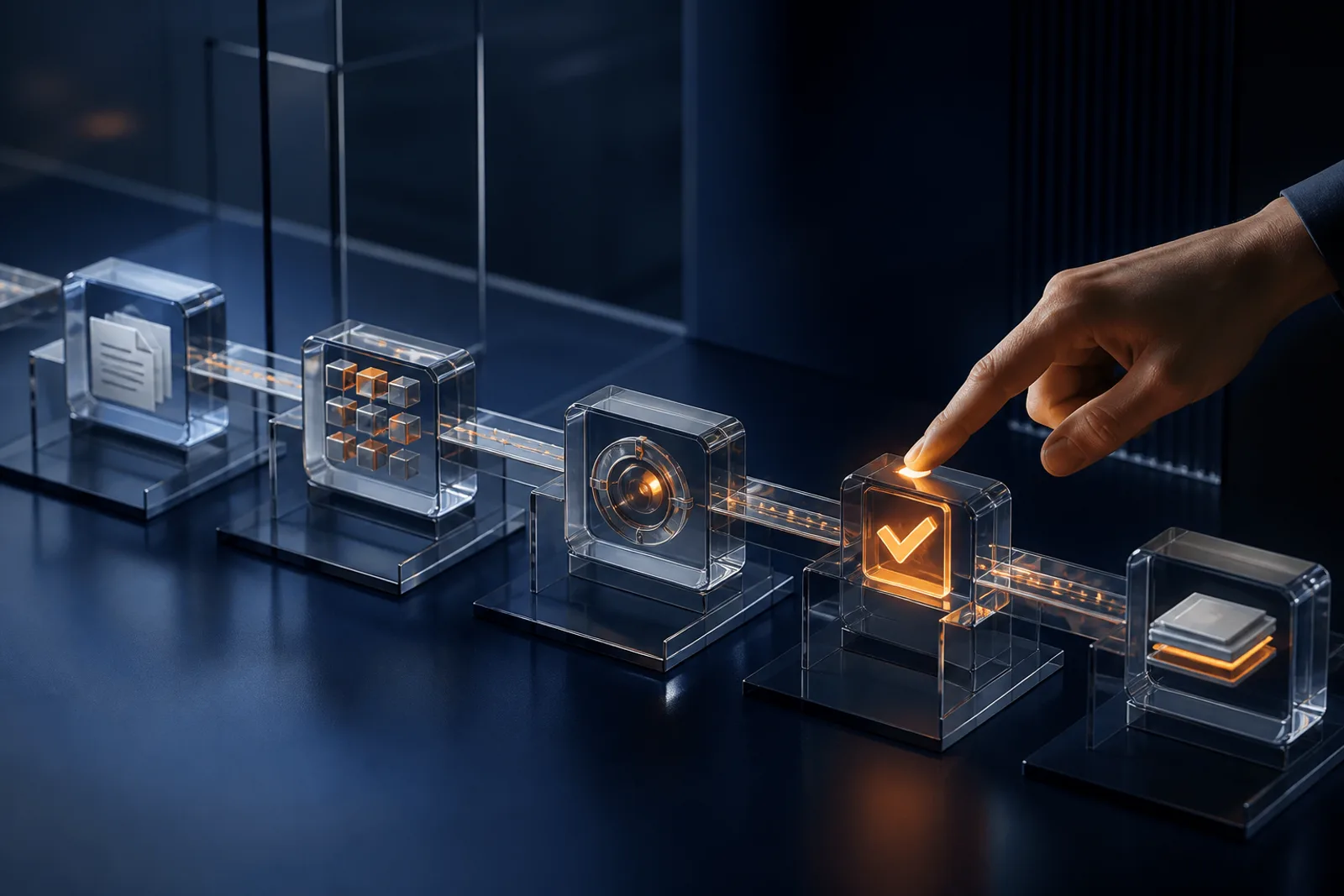
AI systems with operating boundaries
Design and build AI agents that research, classify, prepare work and call approved tools while keeping consequential actions under human control.
Who this service is designed for.
Teams with a repeatable knowledge or operations workflow that crosses documents, inboxes, CRM records and internal systems.
We begin with the current process and a measurable business condition. The technology follows that diagnosis.
Problems worth solving
Recognise any of these?
Incoming work needs classification and routing
Teams prepare similar drafts from approved information
A workflow needs reasoning but cannot become a black box
Agent opportunity and risk assessment
Tool and permission architecture
RAG and approved-source retrieval
Structured outputs and confidence rules
Human approval and escalation
Evaluation, monitoring and documentation
Worked example
An inbox agent that prepares work without sending it
An agent can classify a shared inbox, retrieve relevant policy material, prepare a suggested response and route the item to the right owner. External messages remain drafts until an authorised person approves them.
Questions before tools
Four decisions shape the architecture.
Which sources may the agent use?
Which tools may it call?
What must a person approve?
How will quality and failure be measured?
How delivery works
Five stages from diagnosis to improvement.
- 01
Discover
Understand the business, systems, users and growth objectives.
- 02
Design
Create the strategy, workflow, product architecture and experience.
- 03
Build
Develop and integrate the approved solution in visible stages.
- 04
Launch
Test, document and deploy the solution safely.
- 05
Improve
Monitor performance and continuously optimise the system or campaign.
Questions buyers ask
Before you commission the work.
Is an AI agent the same as a chatbot?
No. A chatbot handles a conversation. An agent may also retrieve information, maintain state and use authorised tools inside a defined workflow.
Can it connect to our CRM?
Yes, where supported APIs and permissions allow it. We begin with read-only access and introduce write actions in controlled stages.
How do you reduce hallucinations?
We constrain sources, require structured outputs, test representative cases, set confidence thresholds and keep approval around high-impact actions.
What happens before you provide a proposal?
We review the current process, intended outcome, users, systems, access constraints and decision owners. The proposal then states the scope, assumptions, exclusions, delivery stages and fee.
Can this be delivered in phases?
Yes. We normally recommend the smallest production-safe phase that can prove value, expose risk and create evidence for the next investment decision.
How do you handle access and sensitive data?
We use least-privilege access, separate development and production responsibilities, document data flows and agree retention, approval and incident procedures before sensitive integrations go live.
Discuss AI Agent Development
Bring us the current process, not a polished specification.
We reply within one business day and tell you what we would examine first.